
The secondary market for ultra-luxury goods is booming, but as the demand for Hermès skyrockets in 2026, the shadowy world of counterfeits has evolved right alongside it. Today’s counterfeiters are no longer just copying silhouettes and slapping on a logo. They are producing “super fakes”—sourcing highly similar leathers, stealing or reverse-engineering hardware, and attempting to mimic centuries-old artisan techniques to fool even seasoned collectors.
If you are about to drop upwards of $15,000 to $50,000+ on a pre-loved Hermès Birkin, Kelly, or Constance, you simply cannot afford to guess. The financial stakes are too high, and the emotional disappointment of buying a counterfeit is devastating.
Whether you are shopping on a reputable resale platform, evaluating a piece from an independent seller, or simply honing your luxury knowledge, you need expert-level insight. Here is the ultimate, comprehensive 2026 guide to authenticating a Hermès bag.
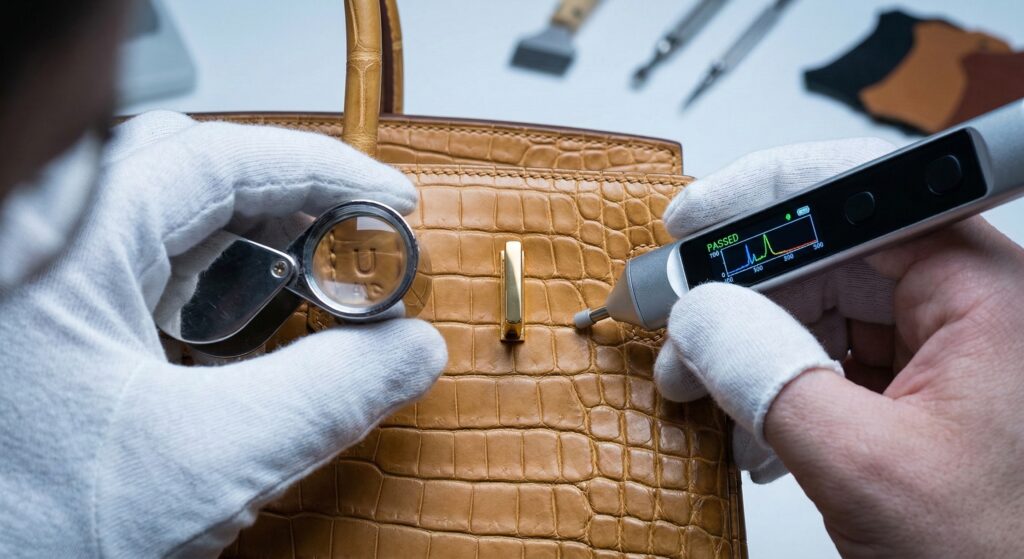
The Rise of the 2026 “Super Fake”
In the past, spotting a fake Hermès bag was relatively easy. The leather felt like plastic, the hardware chipped, and the stitching was sloppy. In 2026, high-tier replicas use real leather, sometimes even sourced from the same tanneries as major fashion houses. They employ sophisticated machinery to replicate hand-stitching and laser-engrave hardware with frightening accuracy.
However, Hermès represents the pinnacle of French craftsmanship. A single bag takes a master artisan anywhere from 18 to 24 hours to create by hand. It is within these microscopic, human details that even the best counterfeiters fail.
1. The Signature Saddle Stitch (Le Cousu Sellier)
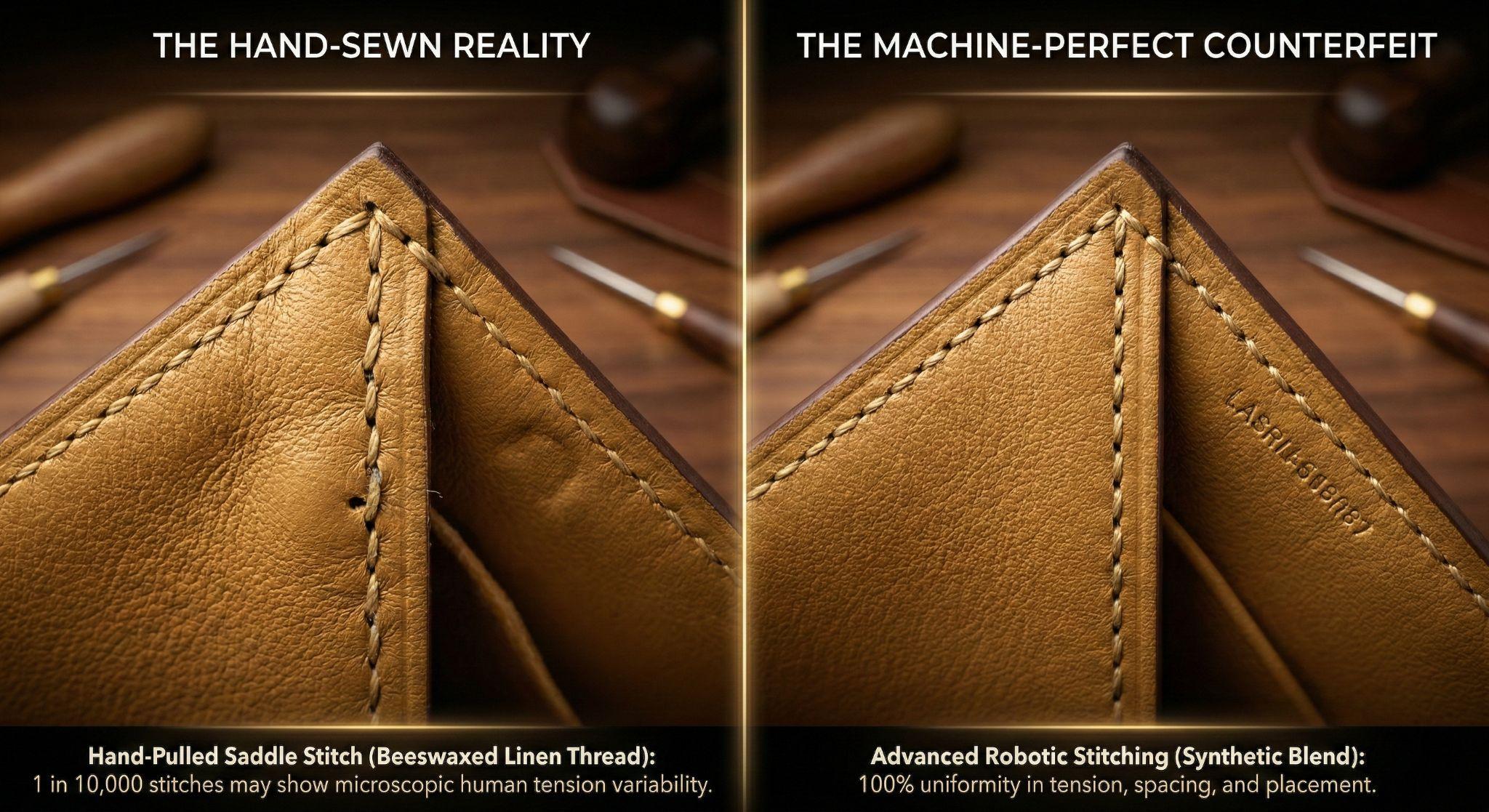
The most crucial element of any Hermès bag is the stitching. Hermès employs a traditional saddle stitch (cousu sellier), a technique dating back to the house’s origins as a harness and saddle maker in the 19th century.
The Authentic Stitch
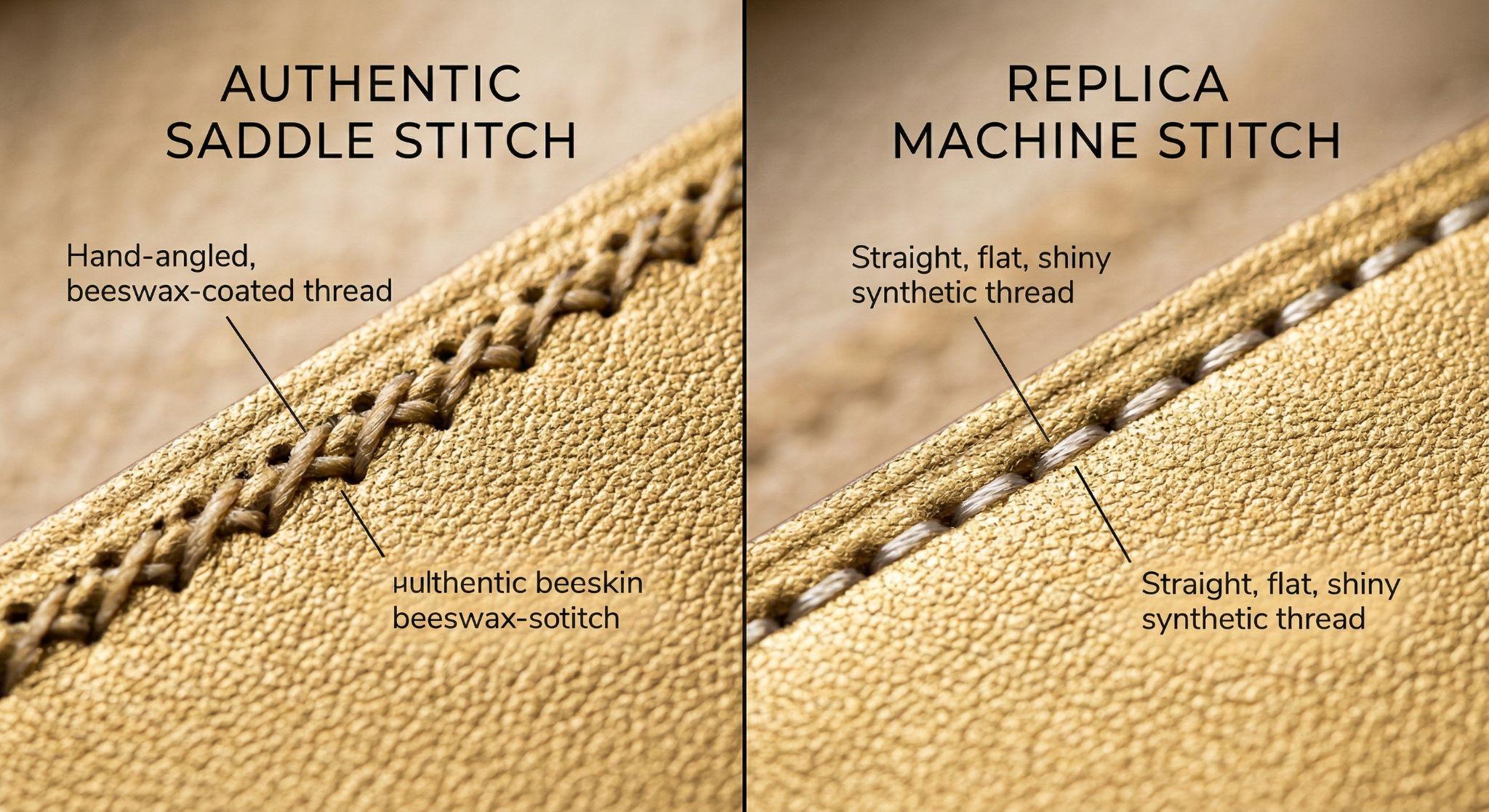
This technique requires an artisan to pass two separate needles, threaded with beeswax-coated linen thread, through a single awl-punched hole simultaneously. Because of the way the thread is pulled and crossed, it creates a distinct, slightly angled stitch.
- The Angle: The stitches will typically have a slight, consistent angle, leaning toward the right.
- The Finish: At the end of a seam, the artisan will backstitch to secure the thread. You will often see a beautifully finished double stitch that melts seamlessly into the leather.
- The Interior: Even on the inside of the bag, the stitching should remain impeccably neat, though the angle may appear slightly different depending on how the leather was held in the wooden clamp (the pony).
The Replica Flaws
Machines cannot perfectly replicate the tension and angle of a true hand-done saddle stitch.
- Straight Lines: Machine stitching lies perfectly straight and flat. If the thread looks perfectly horizontal, it is a glaring red flag.
- Tension Issues: Machines often pull the thread too tightly. If you notice the leather puckering, warping, or bulging around the stitch holes, it is likely a counterfeit.
- Fraying: Hermès uses high-grade linen thread coated in beeswax to prevent rot and fraying. Fakes often use synthetic polyester threads that look unnaturally shiny or begin to fray with minimal use.
2. Leather Quality, Texture, and Scent
Hermès sources the top 1% of leather in the world. Their tanneries reject hides for blemishes that other luxury brands would happily use. The sensory experience of an authentic Hermès bag—how it feels, how it moves, and how it smells—is incredibly difficult to fake.
Popular Leathers and Their Characteristics
- Togo: The most popular leather for Birkin bags. It is a baby calfskin with a pronounced, pebbled grain. It should feel supple but maintain its structure, featuring deep, natural veining that cannot be perfectly patterned by a machine. Fakes often press a fake grain onto cheap leather, resulting in a repetitive, unnatural pattern.
- Epsom: A pressed-grain leather that is rigid, structured, and lightweight. While fakes can mimic the cross-hatch pattern, authentic Epsom has a very specific, slightly dry but luxurious feel, whereas fakes feel like cheap, hard plastic.
- Clemence: Similar to Togo but softer, heavier, and with a flatter grain. A fake Clemence bag will often slouch unnaturally fast and feel overly heavy or rubbery.
- Barenia: A smooth, heritage calfskin that develops a rich patina over time. It is meant to scratch and absorb oils. Replicas rarely use real Barenia because it is incredibly expensive and difficult to work with; fake smooth leathers will look painted or overly treated.
The Smell Test
An authentic Hermès bag smells richly of high-quality, vegetable-tanned or heavily refined leather. It has an earthy, luxurious aroma. Replicas, even “super fakes,” are often produced in rushed environments using harsh chemicals. If the bag smells of chemical solvents, glue, rubber, or plastic, step away immediately.
3. Hardware Weight, Engraving, and Mechanics
Hermès hardware is a masterpiece of metallurgy. It is generally crafted from solid brass and thickly plated in precious metals—typically 18k to 24k gold, palladium, permabrass, or rose gold.
The Weight and Feel
Authentic hardware should feel cold to the touch and reassuringly heavy. Fakes often use hollow base metals coated in a thin layer of color, which feels alarmingly light and warms up quickly in your hand. Over time, fake hardware will chip or flake, revealing a cheap silver or copper tone beneath. Authentic Hermès hardware may tarnish or scratch, but it will never peel.
The Engravings
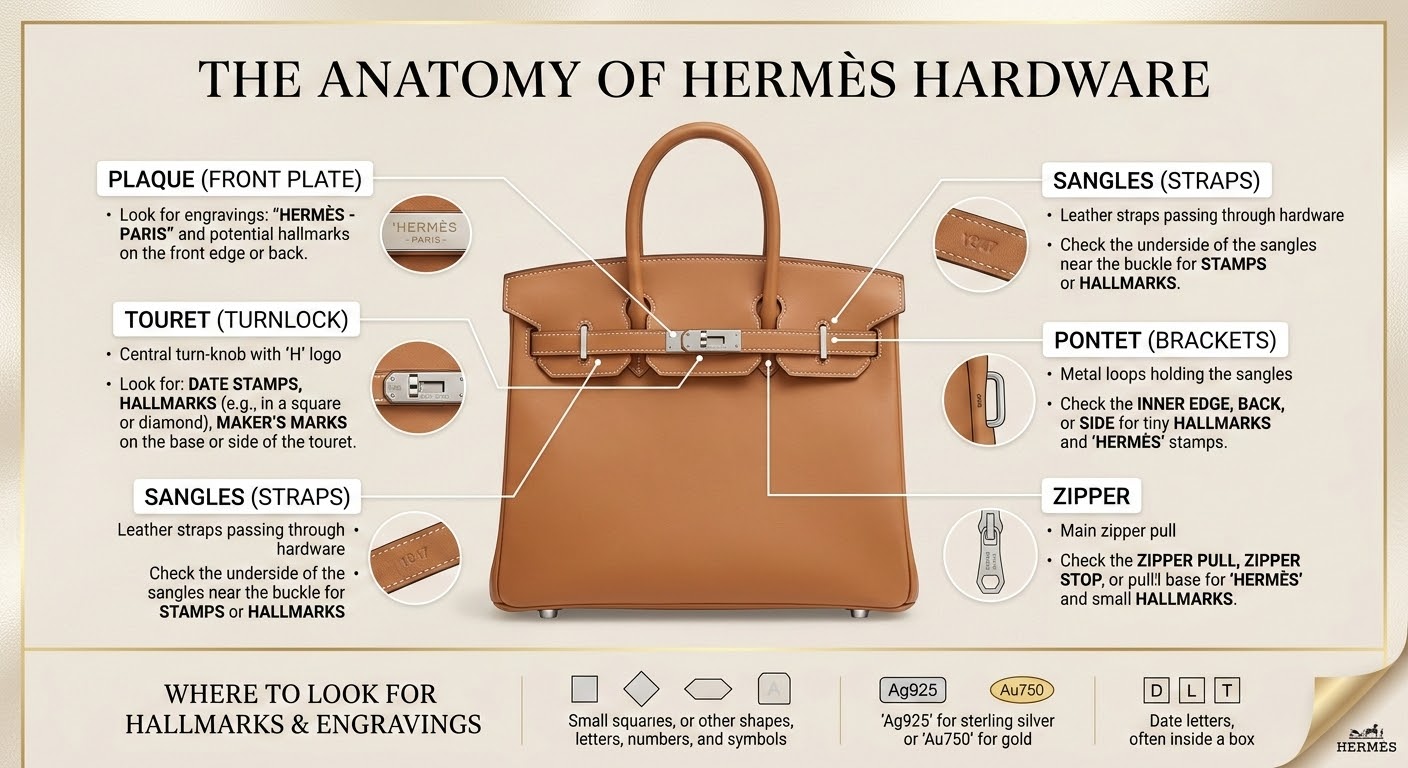
The front plate of a Birkin or Kelly features the “HERMÈS-PARIS” engraving.
- Authentic: The lettering must be crisp, with perfectly spaced, elegant typography. The font is proprietary.
- Replica: In 2026, many super-fakes get the font reasonably close, but they fail on the depth. The engraving is often too deep (looking stamped), too shallow, or looks slightly “burned” and pixelated around the edges due to the use of cheap laser engravers.
The Touret, Pontets, and Clochette
- The Touret (Turnlock): The turnlock should twist smoothly with a satisfying, firm resistance. It should not feel loose or wobble like a loose tooth.
- The Rivets: The small metallic studs (clou) holding the hardware in place should be slightly rounded on top, never completely flat, and never sunk deeply into the metal plate.
- The Lock and Keys: The padlock should be heavy, and the number engraved on the bottom of the lock must match the number engraved on the keys exactly.
The Zipper
Hermès has its zippers custom-made. On most modern bags, they use high-end zippers that glide effortlessly without catching. The zipper pull should lay perfectly parallel to the zipper line, never dangling loosely or sitting perpendicular. Furthermore, authentic Hermès zippers feature a unique ‘H’ stop at the base of the zipper track.
4. The Heat Stamp and Blind Stamps (Date Codes)
Stamps are the ultimate fingerprint of a Hermès bag, and they are where many counterfeiters make fatal errors.
The Main Heat Stamp
The front heat stamp, sitting just below the stitching, reads: HERMÈS PARIS MADE IN FRANCE
- Authentic: The foil (gold or silver to match the hardware, or blind stamped directly into the leather on some models) should sit perfectly flush with the leather. It is stamped deeply enough to be perfectly legible, but not so deep that the metallic foil bleeds, smears, or presses heavily into the leather’s grain.
- Replica: Counterfeit stamps are often thick, blocky, and completely fill the grain of the leather. They might use the wrong font, or the spacing between lines will be slightly off.
The Blind Stamp (Date Code and Artisan ID)
Hermès uses a blind stamp—a series of letters and shapes pressed into the leather without foil—to indicate the year of manufacture and the specific artisan (or workshop) who crafted the bag.
- Location: Historically, this was located on the back of the closure strap (sangle). In more recent years (post-2015), Hermès moved this stamp to the inside of the bag, usually on the upper left-hand side gusset.
- The Code: Hermès cycles through alphabetical codes. For example, a square around a letter indicates bags made between 1997 and 2014. No shape around the letter is used for current production years.
- Authentication Tip: Always ensure the year code matches the bag’s supposed age, the type of leather used (some leathers were discontinued or introduced in specific years), and the style of the hardware. A mismatch is a guaranteed fake.
5. Silhouette, Proportions, and Edge Paint
You can often spot a fake Hermès from across the room simply by observing its posture.
The Handles
The handles of a Birkin or Kelly are complex to build. They are composed of layers of leather folded and stitched.
- Authentic: The handles should stand upright and firm (unless the bag is heavily used Clemence leather). They have a distinct “egg” or teardrop shape at the base where they attach to the bag.
- Replica: Fake handles are often completely round, overly stuffed, or too long. If the handles flop over easily on a brand-new, structured bag, be suspicious.
Edge Painting (Beeswax Finishing)
The raw edges of the leather panels on a Hermès bag are smoothed, painted, and burnished by hand using a proprietary wax blend.
- Authentic: The edge paint should be smooth, matte, and perfectly continuous. It is meant to protect the leather and blend in.
- Replica: Replicas often use cheap, rubbery edge sealant that looks incredibly shiny, thick, and gloppy. Over time, fake edge paint will crack and peel off in long rubbery strips.
6. Dust Bag, Box, and Packaging Details
Fakes often give themselves away before you even pull the bag out of the box. Counterfeiters spend their money trying to fake the bag, not the packaging.
The Dust Bag
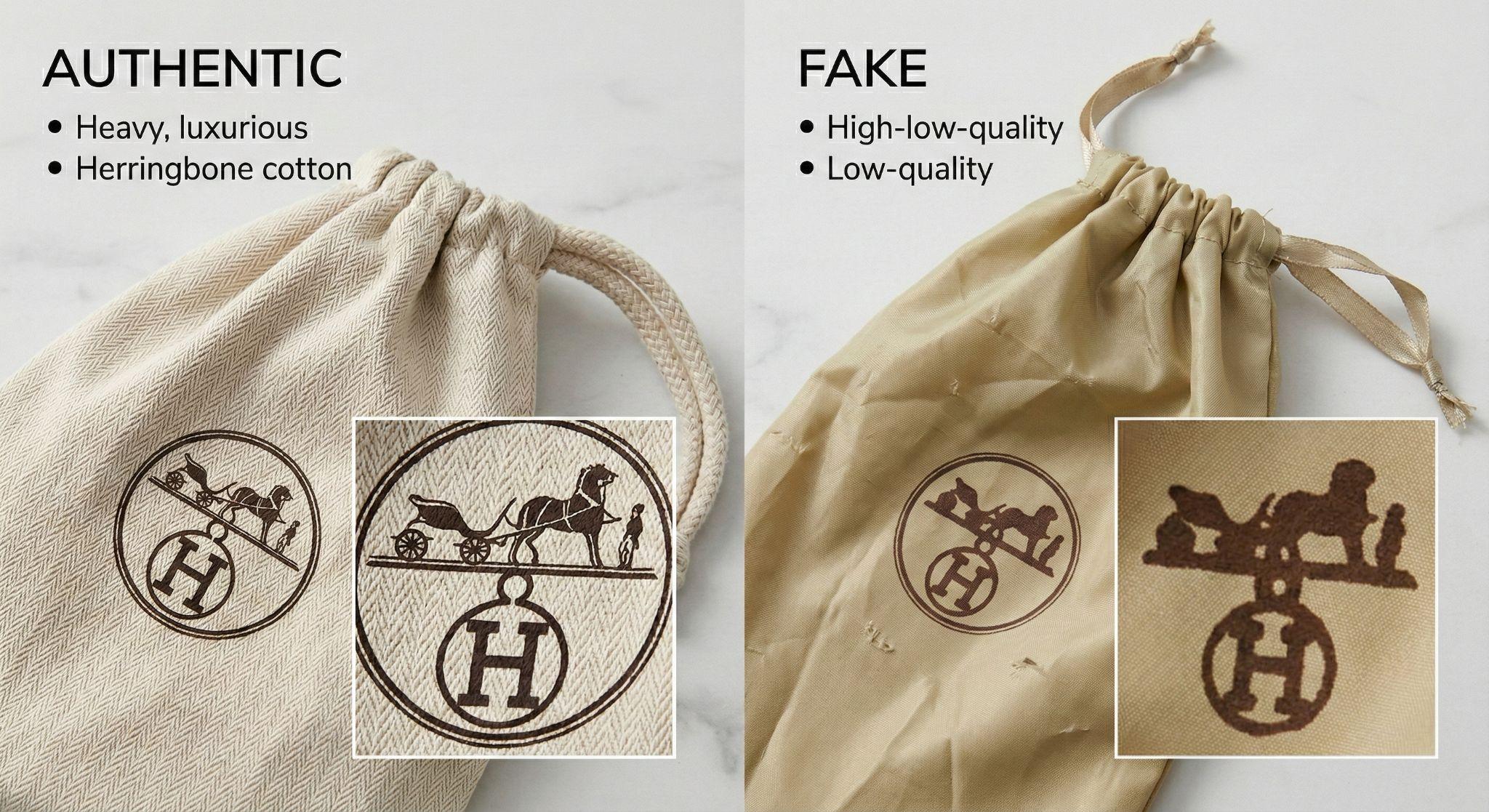
The authentic Hermès dust bag is heavy and luxurious.
- Material: Modern dust bags are made of a high-quality, heavy herringbone cotton canvas. (Vintage bags may come in soft, velvety orange or brown flannel).
- The Logo: The dark brown Hermès carriage logo (Le Duc) should be incredibly sharp and detailed. Look closely at the spokes of the carriage wheels and the horse’s harness; on a fake, these tiny details will blur together into a solid brown blob.
- The Drawstring: The drawstring is made of a thick, woven cotton cord, not cheap synthetic ribbon.
The “Authenticity Card” Myth
Red Flag Warning: If a Hermès bag comes with a plastic credit-card style “authenticity card” or a paper certificate with a barcode, it is 100% fake. Hermès has never, in its entire history, issued authenticity cards. This is a common practice for brands like Chanel or Dior, but it is the easiest way to immediately spot a fake Hermès.
The Orange Box
Authentic Hermès boxes are solid and feature a specific shade of vibrant orange. The inside of the box is white, and the dark brown border around the edges of the box actually contains invisible UV-reactive ink. If you shine a blacklight on the brown edging of a modern authentic box, a hidden Hermès logo will appear.
7. The Importance of Professional Authentication in 2026
While this guide provides you with a robust foundation, the “super fakes” of 2026 are terrifyingly good. Some counterfeiters even use real Hermès hardware harvested from severely damaged vintage bags and apply it to meticulously crafted replica bodies.
If you are spending five figures on a bag, never rely solely on your own eyes. ### Use Trusted Resale Platforms Always buy from highly reputable platforms that have deep, multi-tiered authentication processes in place.
Hire an Independent Expert
If you are buying from an independent seller or a peer-to-peer marketplace, always use a highly rated third-party luxury authentication service before finalizing the transaction. Services like Bababebi are industry standards for Hermès authentication.
8. Caring for Your Authentic Investment
Once you have verified and purchased your authentic Hermès piece, maintaining its value is paramount. Hermès leather requires specific, high-end care to prevent drying, cracking, and loss of shape.
- Storage: Always store your bag stuffed with acid-free tissue paper or a custom-fit Never use chemical-heavy commercial leather wipes.
- Protection: To protect the delicate interior from spills and pen marks, consider a custom felt [Insert Affiliate Link: Bag Organizer/Insert].
Frequently Asked Questions (FAQ)
Q: Does Hermès have serial numbers? A: No, Hermès does not use serial numbers. They use “blind stamps” (date codes) which indicate the year of manufacture and the artisan’s ID, but these are not unique serial numbers meant to track individual bags.
Q: Can a Hermès bag be authenticated by a boutique? A: Hermès Sales Associates (SAs) are explicitly forbidden from authenticating bags in-store. However, if you send a bag into Hermès for “Spa” (repair and reconditioning services), they will refuse to service the bag and may confiscate it if they determine it is counterfeit.
Q: Are all Birkin bags hand-stitched? A: The main construction of a Birkin or Kelly—specifically the crucial stress points and exterior seams—is entirely hand-stitched using the saddle stitch. However, Hermès does use sewing machines for long, hidden interior seams (like the interior of pockets) to ensure durability.
Q: What should the inside of a Birkin look like? A: The interior of a Birkin or Kelly is almost always lined with Chevre (goat leather), which has a slight texture and a subtle sheen. It should never be lined with fabric, cheap suede, or the same heavy exterior leather.
Conclusion
Authenticating a Hermès bag in 2026 requires patience, a keen eye for microscopic detail, and an understanding of the brand’s uncompromising heritage. By scrutinizing the angled saddle stitch, the weight of the hardware, the depth of the heat stamp, and the luxurious feel of the leather, you can protect yourself from the influx of sophisticated replicas. Remember, when in doubt, lean on the expertise of professional authenticators and trusted resale partners to secure your investment.