
Let’s address the elephant in the boutique right away: buying a Hermès Birkin at retail in 2026 without an extensive purchase history is one of the most challenging feats in the luxury world. If you are frustrated by the whispers of “pre-spend,” the elusive waiting lists, and the opaque rules of “the game,” your feelings are entirely valid. It is an intentionally difficult system to navigate.
With global quotas now centralized, corporate oversight tightening, and the brand aggressively cracking down on the gray market and resellers, the days of simply charming a Sales Associate (SA) into handing you a quota bag on your first visit are practically over. Even celebrities and ultra-high-net-worth individuals are frequently met with polite but firm rejections.
But is it completely impossible to get a Birkin without dropping six figures on homeware and scarves first? No.
Here is the unfiltered, realistic, and highly strategic guide to securing a Birkin in 2026. We will cover what actually works, what is a complete myth, how the recent legal controversies have shifted the landscape, and what behaviors will get you permanently blacklisted from the House of Hermès.
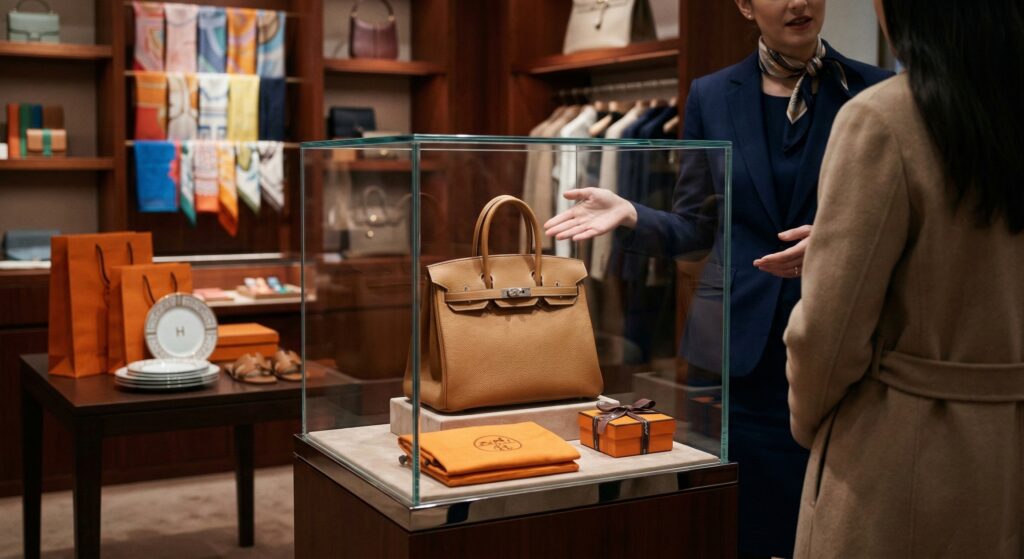
The 2026 Hermès Pricing Reality Check
Before we dive into the strategy of how to buy the bag, you need to be prepared for what it will cost. Following the aggressive early 2025 and 2026 price hikes, Hermès has strategically narrowed the gap between their retail prices and secondary market values, though a massive premium still exists for immediate access.
Here is what you can expect to pay for a standard leather (like Togo or Epsom) Birkin in 2026. Keep in mind that exotic leathers (ostrich, crocodile, alligator) command exponentially higher prices, easily pushing into the $40,000 to $100,000+ range at retail.
| Birkin Model | 2026 US Retail Price (Est.) | 2026 Europe Retail Price (Est.) | Secondary Market Value (Pristine) |
|---|---|---|---|
| Birkin 25 (Togo) | $13,500 | €9,600 | $25,000 – $30,000+ |
| Birkin 30 (Togo) | $14,900 | €10,600 | $22,000 – $28,000+ |
| Birkin 35 (Togo) | $16,300 | €11,600 | $18,000 – $22,000+ |
Note: The Birkin 25 remains the most globally coveted size, driving its secondary market premium significantly higher than the larger 35.
The Myth vs. Reality of the “Pre-Spend”
If you have spent any time on TikTok or luxury forums, you have heard the term “pre-spend.” This is the internet’s term for the amount of money you allegedly must spend on non-quota items (shoes, ready-to-wear, jewelry, homeware) before an SA will offer you a Birkin or Kelly. Rumors often cite a 1:1 or 2:1 ratio (spending $15,000 on other goods to be offered a $15,000 bag).
The Legal Controversy
In recent years, this practice has come under intense scrutiny, culminating in highly publicized antitrust lawsuits in California, accusing Hermès of illegal “tying” (forcing a consumer to buy unwanted products to access a desired product). While Hermès vehemently denies any official policy tying bag offers to other purchases, the reality of the boutique experience tells a nuanced story.
The Reality
There is no official, written “rule” or corporate ledger tracking a 1:1 ratio. Buying five non-quota bags (like a Picotin or an Evelyne) will not magically unlock a Birkin.
However, Hermès is a business, and SAs are heavily incentivized by commissions on non-leather goods. More importantly, SAs are tasked with protecting the brand’s crown jewels from resellers. Establishing a profile by purchasing Fine Jewelry, Watches, Ready-to-Wear (RTW), and Homeware shows the SA that you are a genuine client who appreciates the holistic lifestyle of the brand, not just a bag flipper looking for a quick $10,000 profit on the secondary market.
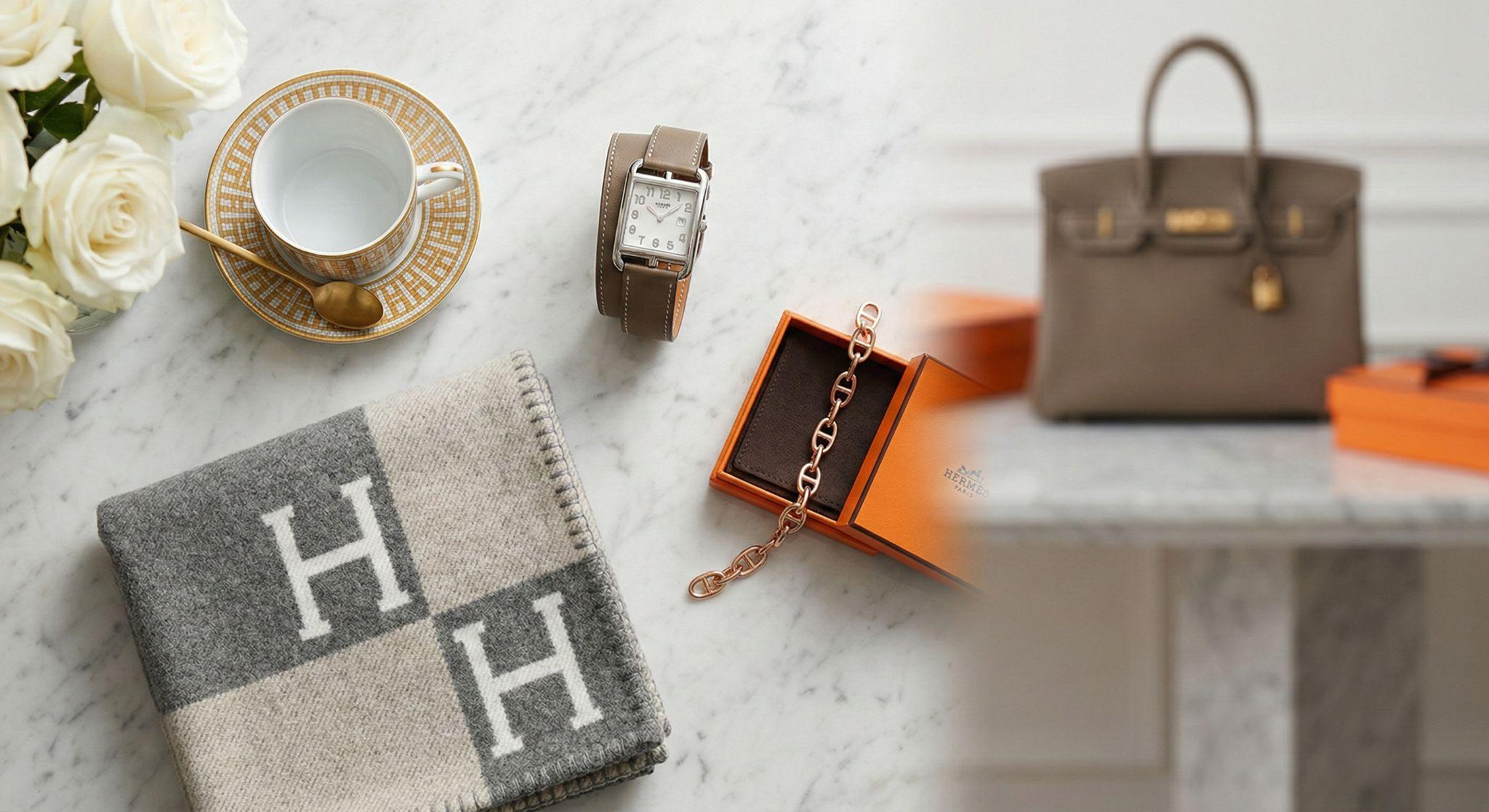
A Smarter Approach: If you genuinely want to build a profile, consider using a [Insert Affiliate Link: Luxury Styling Service]. A professional stylist can help you organically integrate Hermès Ready-to-Wear and fine jewelry into your wardrobe, ensuring your purchases are items you actually love and wear, rather than forced “pre-spend” investments you will later regret.
The 2026 Global Crackdown: New Rules You Must Know
If your strategy is based on advice from 2022, you are going to fail. In 2026, Hermès corporate has tightened the reins significantly. SAs have far less autonomy than they used to, and corporate oversight dictates who gets approved for a quota bag.
1. Global Centralized Profiles: In the past, you could build a profile in Miami, strike out, and try your luck as a “new” client in Beverly Hills. No longer. Your passport, phone number, and credit cards link to a single global profile. Bouncing from store to store looks suspicious and ruins your chances.
2. The Household Rule: “One household, one account.” Couples and families living at the same address are now frequently consolidated into a single profile. You cannot bypass the two-quota-bags-per-year limit by having your spouse open a separate account.
3. Expanded Quota Categories: It used to just be the Birkin and Kelly. Now, the Constance, and sometimes even specific high-demand variations of the Picotin or Kelly Messenger, are closely monitored and restricted.
The Buying Process: The US Strategy vs. The Europe Strategy
If you have zero purchase history, your geographical location dictates your entire strategy. The approach in New York is fundamentally different from the approach in Paris.
The US Strategy: The Long, Monogamous Game
In the United States, walking into a boutique with no history and asking for a Birkin is a guaranteed way to leave empty-handed. The US market is saturated with high-net-worth clients, and the competition for inventory is fierce.
If you are determined to buy at retail in the US, you must accept that you are playing a long game:
· Choose One Store and One SA: Find a boutique local to you and connect with a Sales Associate you genuinely like. This is akin to a long-term relationship. Stick with them exclusively.
· Visit Consistently, Not Desperately: Visit the store every few months. Buy a scarf, look at the shoes, ask about the history of a specific silk print.
· Buy Across Categories: To stand out, you need to show interest in the departments that require true craftsmanship appreciation. Fine jewelry, watches, and ready-to-wear are the fastest ways to prove you are a serious collector.
· Be Patient: Expect this process to take anywhere from 6 to 18 months.
The Europe Strategy: The Paris Lottery
If you have zero purchase history and want a bag this week, Paris remains the only real beacon of hope. However, it requires a tremendous amount of luck.
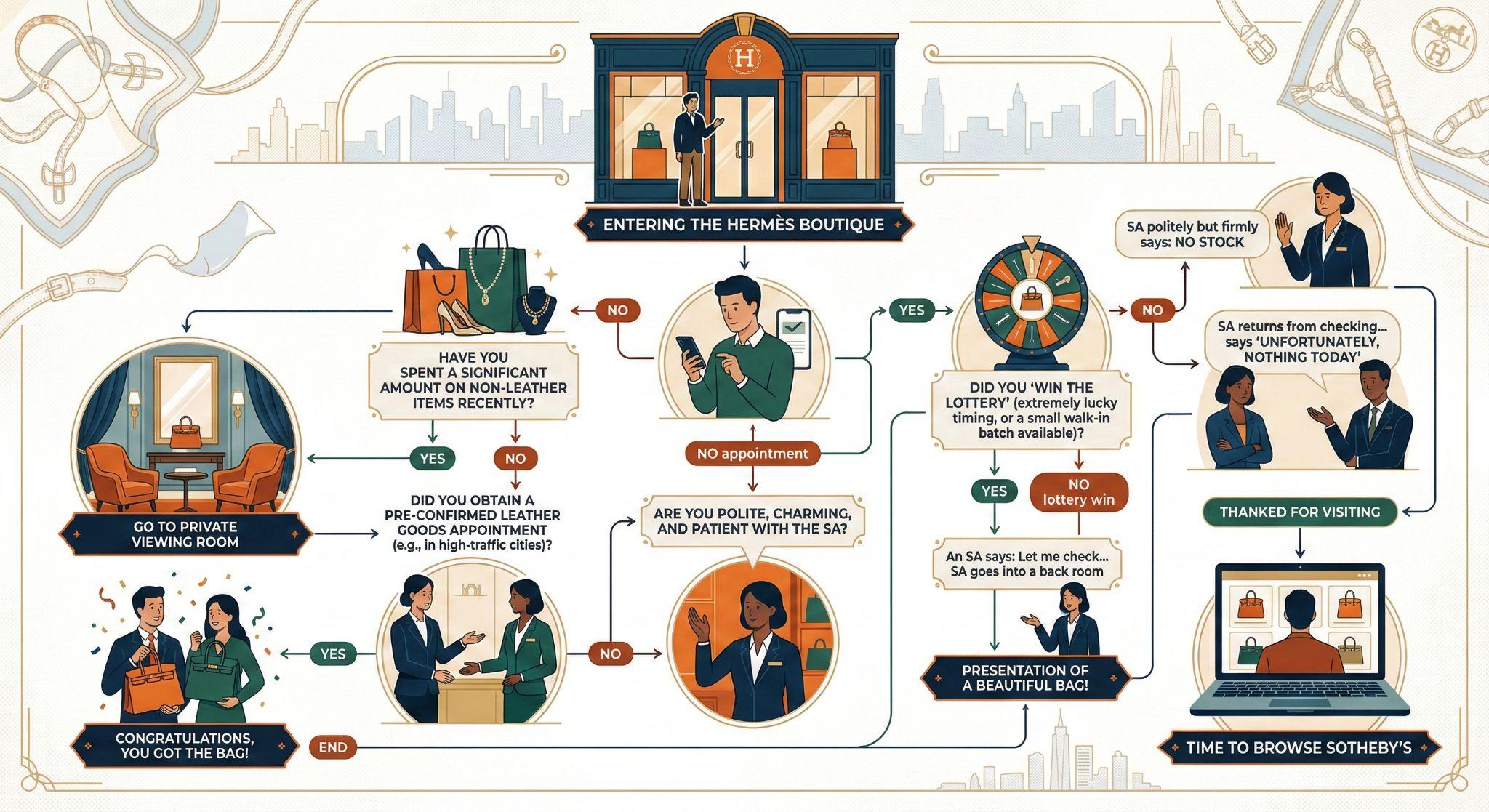
To have a chance at purchasing a quota bag in Paris (at the flagship Faubourg Saint-Honoré, Sèvres, or George V boutiques), you cannot just walk in. You must apply online the day prior for a leather appointment.
· The System: You enter your passport details into the online system between 10:30 AM and 7:30 PM local time. The system acts as a pure lottery.
· The Odds: Thousands of tourists apply daily; only a fraction receive an appointment.
· The Appointment: If you win an appointment, you will sit down with an SA. While a purchase history helps, the Paris boutiques are historically allocated more stock specifically for tourists and first-time buyers. If you are polite, passionate, and flexible on color and leather, you have a legitimate chance of being offered a bag based purely on what happens to be in the stockroom that day.
Travel Hack: Navigating the Paris lottery while trying to enjoy a vacation can be incredibly stressful. Many aspirational buyers utilize elite travel concierges to manage their itinerary, secure luxury accommodations near the flagship, and optimize their daily routines around the Hermès appointment windows.
The Secondary Market: Skipping “The Game” Entirely
Let’s be incredibly candid: for many high-net-worth individuals, time is more valuable than money. The idea of spending 18 months buying $20,000 worth of blankets and sandals just for the privilege of spending another $14,000 on a handbag is fundamentally unappealing.
If you want a specific Birkin (say, a Birkin 25 in Craie Epsom leather with Rose Gold hardware), the chances of your SA offering you that exact specification are astronomically low. You get what you are offered, and refusing an offer can push you back down the priority list.
This is why the secondary market is exploding in 2026. Buyers are willingly paying a $10,000 to $15,000 premium to bypass the politics, the waiting, and the uncertainty.
Where to Buy Safely
If you choose to skip the boutique, you must prioritize authentication above all else. The “super fakes” of 2026 are terrifyingly accurate, and buying from an unverified Instagram seller is a massive financial risk.
Only purchase from vetted, publicly trusted platforms that offer rigorous, multi-step authentication processes and absolute financial guarantees:
·Birkin : The ultimate destination for pristine, highly collectible, and rare Birkins. Buying a Birkin at auction or through their Buy Now platform guarantees top-tier provenance.
Known for exceptional authentication and a massive rotating inventory of immediate-buy Birkins in every imaginable colorway.
A highly regulated platform where you can occasionally find slightly loved Birkins at more accessible secondary market price points.
What SAs Actually Look For (And What They Won’t Tell You)
If you decide to brave the boutique, you must understand the psychology of the Sales Associate. They are the gatekeepers. They hold the keys to the elusive back room. What makes them choose you over the ten other millionaires who walked in that day?
1. Genuine Passion Over Deep Pockets
SAs can spot a reseller from a mile away. Resellers usually march in, ignore the heritage of the brand, ask strictly about resale-value items, and try to throw money around. An SA wants to sell a masterpiece to someone who appreciates it. Ask about the meticulous silk screening process of the carré scarves. Try on a cashmere coat and appreciate the tailoring. Show that you respect the artisan’s 18 hours of labor.
2. Patience and Grace
Coming in and demanding, “Do you have a Birkin 25?” is a guaranteed rejection. SAs deal with entitled, aggressive behavior all day long. They want to offer these highly coveted items to clients who are polite, patient, and pleasant to work with. Treat your SA like a styling partner, not a vending machine.
3. The Right Aesthetic
You do not need to walk into the store covered head-to-toe in designer logos. In fact, “quiet luxury” is much more aligned with Hermès’ brand identity. Dressing elegantly, wearing well-tailored clothing, and carrying yourself with a refined demeanor signals to the SA that you naturally fit the brand’s aesthetic. You represent the House when you carry their bag; they want to ensure you represent it well.
Mistakes That Will Get You Blacklisted
While building a profile takes time, destroying it takes seconds. Hermès is fiercely protective of its brand equity, and certain behaviors will result in a permanent ban.
1. Mentioning “The Game” or Internet Slang
Never, under any circumstances, use terms like “pre-spend,” “quota bag,” “the journey,” or “the Hermès game” while inside the boutique. It shatters the illusion of luxury, cheapens the bespoke experience, and instantly flags you as someone influenced by social media clout rather than a true collector of fine goods.
2. Flipping and Reselling Your Bag
Hermès tracks the serial numbers (blind stamps) of every bag they sell, linking them directly to the buyer’s global profile. If the Birkin you miraculously bought at retail ends up at a public auction house or a major resale site a month later, Hermès will find out. You will be permanently barred from ever purchasing leather goods from them again.
3. Being Rude to Staff
Entitlement will get you nowhere. SAs have the ultimate discretion over who gets a bag, and corporate empowers them to refuse service to abusive clients. If you are condescending, impatient, or rude, you will be shown the door—empty-handed—and your profile will be flagged globally.
Conclusion: Choosing Your Path
Buying a Hermès Birkin in 2026 is an exercise in self-awareness. You must decide what resource you are more willing to spend: your time or your money.
If you genuinely love the Hermès lifestyle, enjoy the thrill of the hunt, and want to build a lasting relationship with the House, playing the long game at your local boutique can be a highly rewarding experience. If you happen to be visiting Paris, shooting your shot at the daily lottery is absolutely worth the few minutes it takes to apply.
But if you are strictly focused on securing the bag of your dreams without the politics, the forced purchases, and the waiting, the secondary market is not a failure—it is a strategic choice made by some of the most powerful collectors in the world.
Would you like me to draft a quick, 3-step checklist you can offer as a downloadable freebie for your readers to take with them on their first Hermès boutique visit?